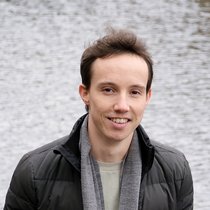
As cities get hotter, they need more trees and green spaces for cooling. But here's the catch: those same trees need water to survive increasingly severe droughts. It's a vicious cycle that threatens the livability of cities worldwide. Jorn de Vos, the first graduate from the Engineering Doctorate (EngD) programme in Environmental Technology Engineering at Wageningen University (WUR-ETE) and AMS Institute, has developed a solution and graduated last November.
A Different Kind of Water Problem
Picture Amsterdam in 2050. Summer heatwaves are more frequent and intense. The city has invested heavily in "radical greening"—planting trees and creating green spaces to cool neighborhoods and improve quality of life. But there's a critical oversight: where will the water come from to keep all that green alive?
The water in the canal is becoming too salty for irrigation. Drinking water is far too precious to use for irrigation. And the current irrigation practice? Amsterdam only waters young trees as "aftercare"—nowhere near enough to maintain the ecosystem services the city depends on for cooling, air quality, and mental health.
"During one of the first stakeholder sessions, Amsterdam mentioned that the water demand for urban green was unknown but would pose a present and future challenge if the benefits of urban green should be maintained in the long run," Jorn recalls. "It was here that the RAIN framework showed the potential of rainwater, and the OASIS model was born to quantify this need for irrigation."
The RainOasis Framework
Working directly with the Municipality of Amsterdam throughout his EngD programme, Jorn developed RainOasis—a framework consisting of two complementary tools that transform how cities think about water:
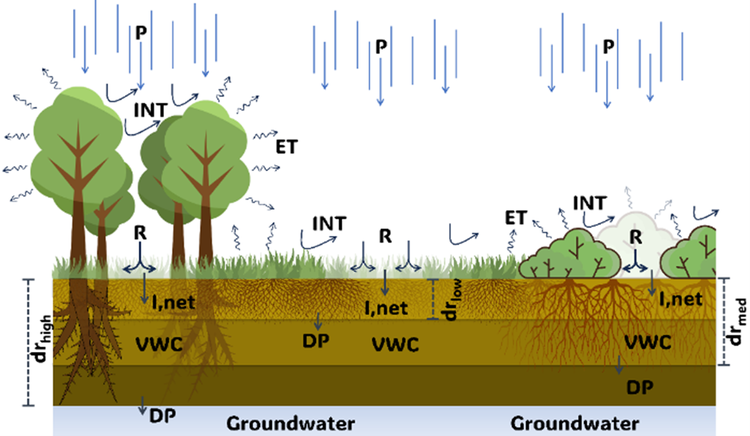
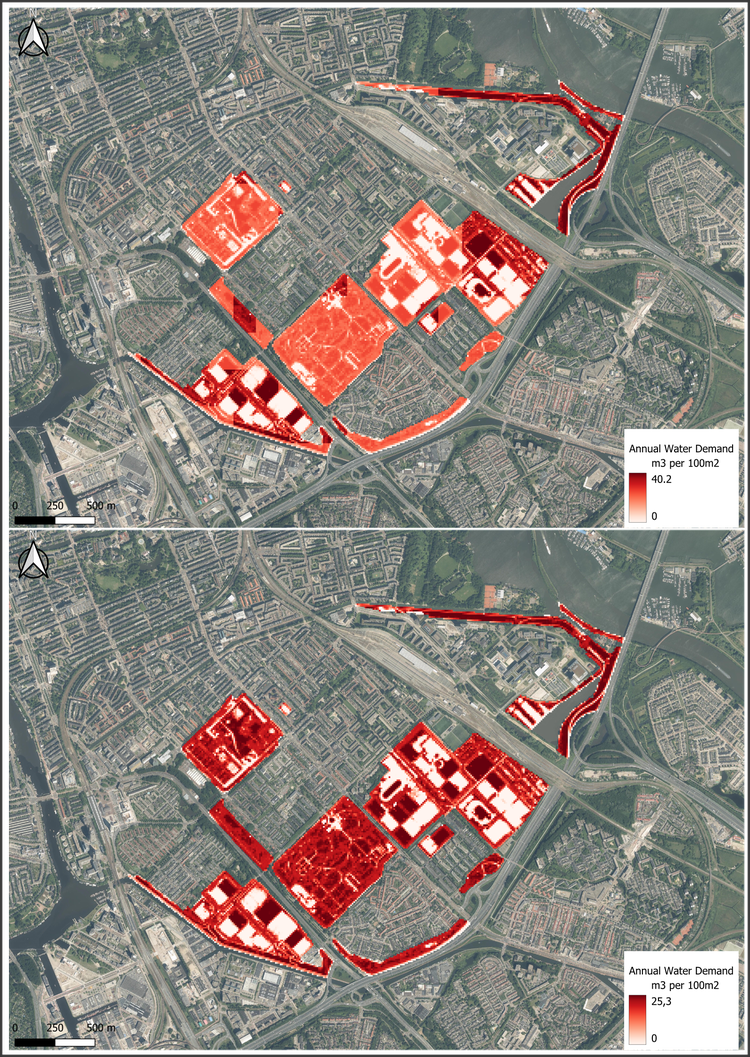
OASIS calculates irrigation needs by simulating soil moisture across various vegetation types, soil conditions, and climate scenarios at a 10-meter x 10-meter resolution. The projections show water demand increases of 10-17% in moderate climate scenarios, rising to 71% in more severe cases.
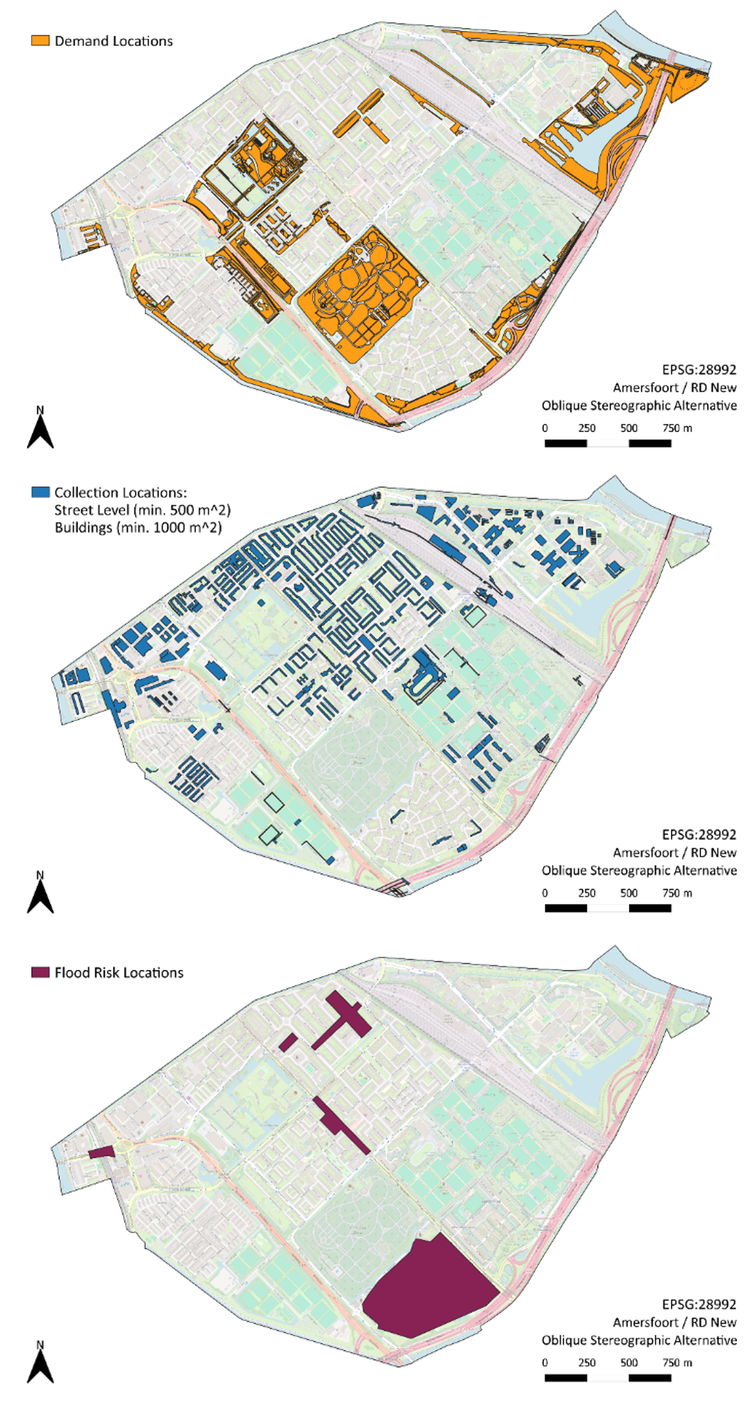
RAIN identifies optimal locations for rainwater storage throughout the city, evaluating sites from underground tanks to constructed wetlands based on multiple criteria, including flood risk and cooling potential.
Together, these tools form RainOasis—a framework that addresses a practical question: can cities store seasonal rainfall to meet the irrigation needs of their summer green spaces?

A Challenge for Urban Green
In Amsterdam's Watergraafsmeer district, the models demonstrated that strategic rainwater storage could meet 64-94% of irrigation needs when preventing plant damage, or 34-47% when optimizing maximum ecosystem services.
"No matter how climate change will unfold, water demand for urban green increases," Jorn notes. "It is especially striking, knowing that we live in a water-abundant environment, that the challenge for urban green is far beyond what we can imagine."
Currently, Amsterdam only provides aftercare irrigation for young trees. Jorn's research indicates that this approach is insufficient for maintaining the ecosystem services that these green spaces offer.
What Makes an Engineering Doctorate Different?
Unlike a traditional PhD, which prioritizes academic publications, the Engineering Doctorate (EngD) is designed for real-world impact. It's a two-year professional doctorate at AMS Institute's MADE Master program, where candidates work embedded within organizations—in Jorn's case, the Municipality of Amsterdam—to solve actual problems with scientific rigor.
"The main focus of my design topic changed," Jorn explains. "I first focused on rainwater storage and its potential. Water demand was just a checkbox to tick. Only after numerous sessions with stakeholders did we discover that urban green's water needs are complex and largely unknown—both in practice and scientific literature."
This iterative, collaborative approach is precisely what the EngD programme is designed for. Jorn didn't just deliver a thesis—he delivered tools the municipality can actually use, informed by the people who will implement them: soil experts, climate adaptation teams, green space managers.
His graduation recognizes not only academic excellence but also the practical value of bridging science and policy.
“This is exactly what the EngD programme should deliver. Jorn didn't just produce a thesis—he co-created tools with the municipality that translate complex climate science into actionable policy. That's the kind of innovation Amsterdam needs to stay livable.”
Willie van den Broek
Program Developer
Policy Impact
Science moves carefully, building knowledge as well. Policy needs answers now. The EngD programme sits in between, translating cutting-edge research into actionable strategies while maintaining scientific integrity.
The result? A policy brief—Note on Drought and Urban Green—with concrete recommendations for Amsterdam:
- Capture rainfall during wetter periods for irrigation needs in drier periods
- Use soils that balance drainage with water retention
- Prioritize irrigation in vulnerable neighborhoods
- Repurpose infrastructure like parking lots and existing green spaces for water collection
Acting Now to Maintain Livability
This work directly advances AMS Institute's mission of creating resilient and regenerative cities. Rather than treating stormwater as waste to be drained away, RainOasis reframes it as a resource to be harvested. Instead of importing drinking water for irrigation—an extractive approach—it creates closed-loop systems that operate in harmony with natural cycles.
The disconnect between Amsterdam's greening ambitions and irrigation strategy reflects a broader oversight. "Relying on greening for its multifunctionality and potential but not considering the needs and requirements it brings with it to unlock and sustain that multifunctionality," Jorn observes.
His advice to other cities facing similar challenges is direct: "Drought is going to have unforeseen consequences. We as humans should move away from our reactive nature, and only by acting now are we able to ensure that our cities remain livable in the future."
On completing the first EngD in this program, Jorn reflects: "The EngD programme is the bridge between academic depth and the societal impact many disciplines strive for. Working together with the problem holder and diving into their organization helped me understand the problem from a practical, scientific, and personal view."
“By using every single drop of rain, we can ensure a thriving urban oasis.”
Jorn de Vos
For a water-rich country like the Netherlands, that's not just an aspiration. It's becoming a necessity.
The RainOasis framework is publicly available and built on a QGIS and Python platform, making it adaptable for use in other cities as well. Amsterdam is exploring the implementation of new development areas. Read more about RainOasis on openresearch.amsterdam