Olivia Willems, Yifan Yang, and Zian Wang received the Young Scientist Award for their presentations at the AMS Scientific Conference 2026.
Eveline van Leeuwen, Scientific Director of AMS Institute, added to this: “With the Young Scientist Award, we acknowledge the quality of young researchers, and show what we can learn from them. We celebrate talent, encourage each other to deliver high-quality work, and look forward to the next steps.”
The jury was impressed by all the Young Scientists’ work, and encouraged everyone to keep exploring ways to apply their research. Doutje Lettinga, Chief Science Officer of the City of Amsterdam and jury member, said: “Many presentations included implications and suggestions for policymakers, urban planners, and authorities. We should incorporate these creative ideas. I hope even those who didn’t win will publish, present, and work together with the municipality.”
Nina Lobo, also part of the jury and an MSc MADE graduate, complimented all young scientists on their work and appreciated their courage: “The choice to prepare your work for an award and present it requires real self-belief and tenacity. I’m proud that early-career researchers of all ages and backgrounds are participating because collectively, our work defines the future.”
Serendipitous Cycling
Olivia Willems (imec) received the award for her presentation, ‘From A to Anywhere: Enabling Serendipitous Cycling with Urban Recommender System Design.’ Willems’ work aims to encourage city cycling by adding serendipity features to navigation systems. As urban mobility faces growing pressure, increased bicycle ridership reduces traffic congestion and improves citizens’ health.
“I believe that, including serendipity, which are unexpected, pleasant, and favorable events, in cycling routes can improve cities. If people discover that a daily ride can also include curiosity, beauty, surprise, or a small, rewarding detour, cycling becomes more than a functional means of transportation; it becomes enjoyable. This helps people to choose the bike more often, and for longer periods of time.”
Olivia Willems, winner of the Young Scientist Award
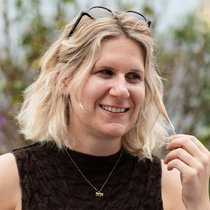
According to the jury, the study was “well organized, an innovative topic, and contained an interesting mixed method approach.” Willems used the Living Lab approach to conduct semi-structured interviews and to model serendipity into cycling routes. The challenge was to select the events that enhance the route, without disrupting it.
“Our research found that cyclists like unexpected discoveries, but only if they still feel meaningful and if users retain control over the degree of unpredictability,” Willems explains. “The goal is not to push random distractions into a route, but to create conditions for valuable discoveries that fit the moment, the person, and the context.”
Willems’ presentation in the Full Paper session on Urban mobility led to improvements to the model and new perspectives. “I learned to take sunny and shady spots into the scope. The example of the Dutch app ‘Zonopjebakkes.nl’ shows which terraces are in the sun and captures the project's spirit very well. It is small, contextual, and human, yet it can genuinely shape how people experience a city."
Olivia Willems speaking at the ceremony (foto: Maarten Nauw)
“What I appreciated most is that it placed my work in dialogue with broader questions about accessibility, inclusion, and urban futures. The paper focuses on cycling and digital route planning, but the conference context made clear that improving cities is never only a technical issue. It is also about whose experiences are supported, what kinds of mobility we value, and how digital tools can contribute to more inclusive and livable urban environments.”
Understanding Solar Panel Adoption
Yifan Yang (Utrecht University) and Zian Wang (TU Delft) won the award for their presentation, ‘Understanding Household Solar PV Adoption with LLM-Based Agents: Capturing Decision Reasoning and Behavioral Heterogeneity.’ As cities move toward renewable energy sources, Yang and Wang show how Large Language Model (LLM)-based agents can help policymakers understand people's reasoning for adopting solar photovoltaic (PV) technology, or solar panels. The jury judged the work as “Well presented, novel, and immediately raised the question of how it can be applied in policymaking processes.”
“Residential solar PV adoption is inherently a complex, interactive decision process. Households weigh their own financial situation, housing conditions, and values, while also responding to changing external signals like policy updates, electricity prices, and what neighbors are doing.”
Yifan Yang and Zian Wang winners of the Young Scientist Award
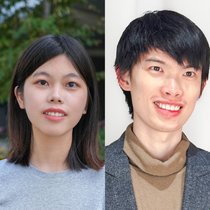
By being trained on vast amounts of human-generated text, LLMs have absorbed broad social knowledge and developed the reasoning abilities necessary for simulating people's decision-making. “This means that LLMs can engage in ‘role-play’ where they can take on the perspective of a specific type of person and reason from that position in a contextually coherent way”, explain Yang and Wang.
LLM-based agents have been applied meaningfully in social behavior research and have reproduced well-known behavioral patterns in replications of classic social science experiments [1, 2]. This forms the basis of Yang and Wang’s argument that the simulation is capturing something real about human decision-making. “Another key advantage of this approach is that the agents do not simply output a binary decision, but also provide the reasoning behind it, making the simulation results more interpretable and useful for policymakers. Of course, hallucination (the generation of inaccurate or fabricated outputs) remains a main concern, and we do not claim these models can perfectly predict human behavior”, state Yang and Wang. “We believe that with continued model improvements, and equally importantly, with more careful task design and prompt engineering, the reliability of this kind of simulation will keep improving.”
Yifan Yang speaking at the ceremony (foto: Maarten Nauw)
Presenting in the Pitch and Polish session on the digitalization of urban systems was encouraging and valuable for Yang and Wang: “Urban challenges are complex and multi-faceted, and it was valuable to see how researchers and practitioners from different disciplines and backgrounds each bring their own perspectives and methods to these shared problems. Furthermore, presenting at the Pitch and Polish Session pushed us to think carefully about how to communicate an entire research project to a broader audience in a short amount of time, which is a different skill from writing a paper.”
What’s next?
Willems continues her work at imec as part of the Serendipity Engine. Willlems: “The award helps me continue doing what I aim for: connecting technology, users, and real-world impact. I strongly believe that the most valuable innovation happens at the crossroads where different perspectives, disciplines, and technologies meet. Moreover, the conference confirmed for me that there is room in urban mobility research for approaches that move beyond efficiency alone and take pleasure, curiosity, and everyday experience seriously.”
Yang and Wang’s presentation developed from their master’s thesis in the MSc MADE program, the joint master's degree of Wageningen University & Research and TU Delft, at AMS Institute. Yang is currently investigating environmental exposure in the built environment at Utrecht University. Wang is building on the work by exploring how AI can support human-centered urban design and planning at the Technical University of Delft.
Yang and Wang: “It has been a long journey, and we are very grateful to our supervisors for their guidance and to the AMS conference committee for this recognition. As early-career researchers, this kind of acknowledgment is encouraging. It makes us more confident to try new methodological approaches, even when the outcome is uncertain. As for the future, we are both continuing our academic paths, wherever that may lead.”
About the AMS Scientific Conference 2026
During the conference, attendees presented their work in two kinds of presentation sessions. The Full Paper Sessions included presentations and discussions of late-stage papers, while the Pitch & Polish Sessions featured rapid-fire presentations of emerging research ideas. The Young Scientist Award winners received a miniature Amsterdam canal house and a 500-euro cash prize.
Want to know more? Visit the Conference Collection or subscribe to the AMS conference newsletter.