Amsterdam wants to protect and foster its natural ecosystems to support biodiversity, but how do you actually count nature in a city? In this 3-day summer school, hosted by MIT and AMS Institute, students explored why urban ecology matters and how monitoring nature helps preserve it. Through expert lectures, coding workshops and field trips, participants gained scientific knowledge and technical skills on how to monitor urban biodiversity.
Why is urban biodiversity critical for resilient cities?
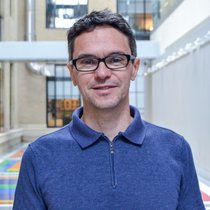
Before you can count nature, you have to know where to look. The summer school opened with the foundations of urban ecology. Fábio Duarte, Associate Director of the MIT Senseable City Lab, gave the opening lecture on how urban planning should put the non-human inhabitants of the city at the center of its proposals, and how that benefits human citizens too.
“We would see cities differently if we accept we share space and time with non-human beings. Once we change our mindset, new technologies and policies will emerge.”
Fábio Duarte
Research Scientist
This set the tone for the rest of the day, which focused on real-world implementations of this idea. Koen Wonders, ecologist for the city of Amsterdam, gave a tour of Marineterrein, showing current projects to build new habitats for flora and fauna, such as floating green islands that give birds and fish a place to live. Participants then visited Wonderwoods in Utrecht to see greenery on high-rise buildings, and the city's restored canal, once a highway, now making the city more resilient and livable.
The day continued with Richard Gill, professor of entomology at Imperial College London, who spoke about the importance of biodiversity and how new monitoring methods contribute to planning biodiverse cities. Knowing where the habitats are one piece of the puzzle, but the next question arises: Which species, and how many, are using these habitats?
Detecting & tracking of nature
The second day began with the technical aspects of detection and tracking, turning habitats into numbers. Sam Orchard and Jared de Silva from Imperial College London gave an overview of their research, including the use of acoustic sensors to monitor birds and bees. Researchers from the MIT Senseable City Lab then presented their work monitoring insects and trees with cameras and lidar.
In the afternoon, the focus shifted from concepts to code. Students explored the inner structure of an insect-detection pipeline, debugging along the way, and experimented with AI detection methods such as YOLO.
After detection comes classification. To track biodiversity over time, a city needs to know not just that a species is there, but exactly which one it's looking at.
Deep learning and species classification
To complete the pipeline of measuring biodiversity in cities, the last day was all about AI. It opened with an overview of how neural networks work and how they can classify insects down to the species level, followed by a coding workshop where participants built their own species classifiers. With the full range of tools now in hand, the three days culminated in a closing session where groups presented a wide range of ideas for numbering nature, from tracking the wiggle dance of bees to monitoring insects in the red light district and via camera doorbells.
The three days flew by, but these were far from fleeting insights: Numbering Nature showed that protecting urban biodiversity starts with the ability to measure it, from ecological theory, through sensing and detection methods, to the deep learning tools that turn raw observations into species-level insight. Equipped with this knowledge, participants left with both the scientific grounding and the technical skills to build nature-monitoring projects for cities like Amsterdam, helping to protect nature within the city.
About MIT Senseable City Lab
The MIT Senseable City Lab (SCL) is a multidisciplinary research group dedicated to understanding and shaping the future of cities through data, technology, and human experience. Bringing together architects, urban planners, engineers, computer scientists, and social scientists, SCL explores how digital tools, artificial intelligence, and urban data, are transforming urban life. Viewing cities as living, evolving systems, the Lab uses data, experimentation, and human creativity to design smarter, more resilient, and more inclusive urban futures.