The MSc in Metropolitan Analysis, Design and Engineering (MADE), a two-year joint degree from Wageningen University and TU Delft, combines urban engineering, design, data science, entrepreneurial thinking, and social science to tackle complex sustainability challenges through real-world learning, multidisciplinary teamwork, and partnerships with leading institutions and municipalities.
As Program Director Jess Wreyford explains, ''What sets MADE apart is its transdisciplinary approach. Rather than being solely an engineering program, MADE brings together expertise from environmental science, design, engineering, and other fields, while actively engaging stakeholders and the city itself as a living laboratory. Professors, thesis supervisors, and practitioners from diverse backgrounds work alongside students to explore how cities can become more just, resilient, and regenerative.''
Through this collaborative learning environment, MADE equips students with the ability to integrate technical, social, environmental, and design perspectives. In doing so, it prepares them for the reality of professional practice, where urban transformation depends on collaboration across disciplines and sectors.
Hear from six MSc MADE alumni about how they apply their urban engineering skills in practice:
Lotte Geeraedts
“Translating academic concepts into government is not always easy. Relevant questions are completely different in both worlds, and it is a challenge to get them aligned.”
Lotte Geeraedts, Class of 2020
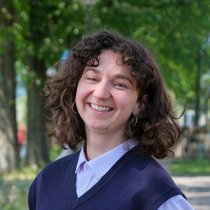
Research: Citizen engagement in circular transitions
Current post: Innovation Manager in Green and Water maintenance, City of Amsterdam and Research Fellow at AMS Institute
Role today: Connecting research and innovation, implementing circular material use and climate adaptation in public space
“The transition from research to municipal work was a natural step for me. I’m interested in the intersection of urban development and politics, and I wanted to work for a public organization because I was curious about the link with politics and the opportunity to make a big impact in practice. But translating academic concepts into government is not always easy. Relevant questions are completely different in both worlds, and it is a challenge to get them aligned.”
Her prior experience during her studies on a project for the City of Rotterdam led her to apply for a technical traineeship with the City of Amsterdam. Geeraedts is also working on the Urban Plastic Soup project for AMS Institute.
Maartje Molenaar
“MSc MADE's interdisciplinary approach taught me to build bridges across disciplines and interests.”
Maartje Molenaar, Class of 2021
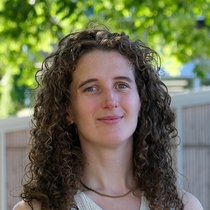
Research: How local urban agriculture can support everyday healthy food choices
Current post: Sustainable Area Development Advisor, City of Amsterdam
Role today: Realizing the City's sustainability ambitions in new construction and transformation projects, advising on climate adaptation, energy-efficient construction, circular construction, and biodiversity
“MSc MADE's interdisciplinary approach taught me to build bridges across disciplines and interests. I not only look at technical solutions but also at the social and economic impact of decisions. I regularly draw on my experience with co-creation and stakeholder engagement to arrive at widely supported solutions. The program gave a unique perspective. I see climate adaptation not only as a technical challenge but also as an opportunity to strengthen social cohesion and improve the quality of life in neighborhoods. This broad perspective is valuable in a complex urban environment such as Amsterdam.”
Molenaar’s motivation for working for the City of Amsterdam was partly because of its progressive approach to sustainability, innovation, and urban development. “This position gave me the opportunity to contribute to concrete projects that directly impact the city and its residents,” she said.
Simon Drolsbach
“In my earlier studies, I learned to analyze problems; through the MSc MADE program, I learned to focus on solving those problems.”
Simon Drolsbach, Class of 2023
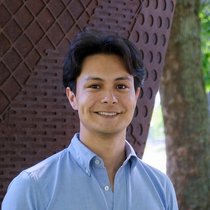
Research: Analyzing the influence of spatial characteristics on cycling route choices in Amsterdam
Current post: Advisor specializing in Sustainable Mobility and Area development at consulting and engineering firm Witteveen+Bos
Role today: Guidance on mobility issues related to area development: parking, shared mobility, pedestrian routing
“The MADE Entrepreneurial Skill course pushed me to create solutions and ensure others see their value. This problem-solving mindset remains a key part of my everyday work. In my earlier studies, I learned to analyze problems; through the MSc MADE program, I learned to focus on solving those problems. Since space scarcity is already a concern in the Netherlands and is increasing, we need to improve our strategies.”
To do that, Drolsbach looks beyond borders to learn from best practices elsewhere. Japan has been managing space limitations for a long time, and he feels there's much to gain from their experience when it comes to using space efficiently and developing adaptable solutions. Such considerations apply to his own work, developing tools to model and predict areas with higher pedestrian activity to enhance walkability in new neighborhoods.
Thomas van der Deijl
“I can turn theoretical concepts, such as geographic analysis theory, into real-world implications for citizens.”
Thomas van der Deijl, Class of 2024
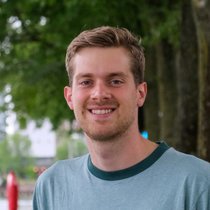
Research: Analyzing the effects of public collective collaboration on urban commons governance
Current post: Citizens and Energy Transition at !WOON foundation
Role today: Assisting Amsterdam residents with housing challenges
His experience in the MSc MADE program has helped him develop the ability to think on different levels and balance abstract ideas with practical application. “When engaging with municipalities and cooperatives, I can relate to geographic analysis theory,” van der Deijl explains. “But by visiting neighborhoods and speaking with residents, I can turn these theoretical concepts into real-world implications for citizens.”
At !WOON, van der Deijl and the team support residents facing the energy transition by providing information, participating with cooperatives and governments, and considering citizens' roles. When homeowners' associations aim to make the energy switch, it becomes more of a social challenge. Shifting away from natural gas as an energy source is a complex system to manage, with many regulations and contacts to navigate. So he helps with initiatives for the energy transition: how to communicate it with neighbors? And how to ensure everyone is on the same page?
Klaas Tromp
“There is still plenty of room to apply academic knowledge in practice. I was surprised by how much the professional world still doesn't know.”
Klaas Tromp, Class of 2021
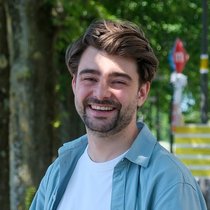
Research: Experience-focused design research
Current post: Assistant Project Manager for the bridges and quay walls program at City of Amsterdam Ingenieursbureau
Role today: Managing the replacement of five historic bridges in the Wallen district, developing a strategy for maintaining sluices throughout the city
“The MSc MADE program equipped me for working for the municipality. Many subjects in the curriculum involved problems and cases related to the physical public domain. For my living lab project, we even collaborated directly with the City of Amsterdam. There is still plenty of room to apply academic knowledge in practice: for example, innovations and urban concepts such as Life Cycle Assessments (LCAs) and Environmental Cost Indicators (ECIs) seemed like general knowledge to me. I was surprised by how much the professional world still doesn't know.”
Today Tromp brings specific abilities to the workplace, such as new visions on innovation, a fresh look at possibilities no one had considered. He applies his knowledge of the complexity of urban challenges and a broader awareness of which stakeholders to include, especially those without a voice.
Abbe Hekkert
“What I enjoy most is fostering collaboration to develop solutions, because ultimately, solving urban challenges can't be accomplished alone.”
Abbe Hekkert, Class of 2025
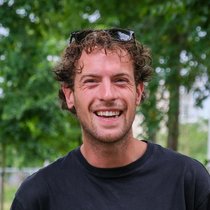
Research: Degradation of organic matter in dredge sediment
Current post: Co-founder of Blauwe Bagger, circular dredging solutions
Role today: Revolutionizing the dredging industry by recycling sand, clay, loam, and organic matter for various sectors
“I was drawn to MSc MADE because of its wide approach to complex urban challenges. People from all disciplines are joining this program, which creates a broad view of problems. I learned that involving the right people early in the process through co-creation is essential. What I enjoy most is fostering collaboration to develop solutions, because ultimately, solving these issues can't be accomplished alone."
Hekkert not only co-founded Blauwe Bagger during his studies, but the MADE program also motivated him to establish the Circulaire Bagger Consortium, which unites stakeholders involved in the dredged material chain to promote recycling. Cities produce enormous amounts of waste materials, including dredged materials, the biggest waste stream in the Netherlands. Particularly in a delta like the Netherlands, Hekkert now works to ensure less dredged material goes to waste.
Photo credits: Alex Schröder and Maud Matthies